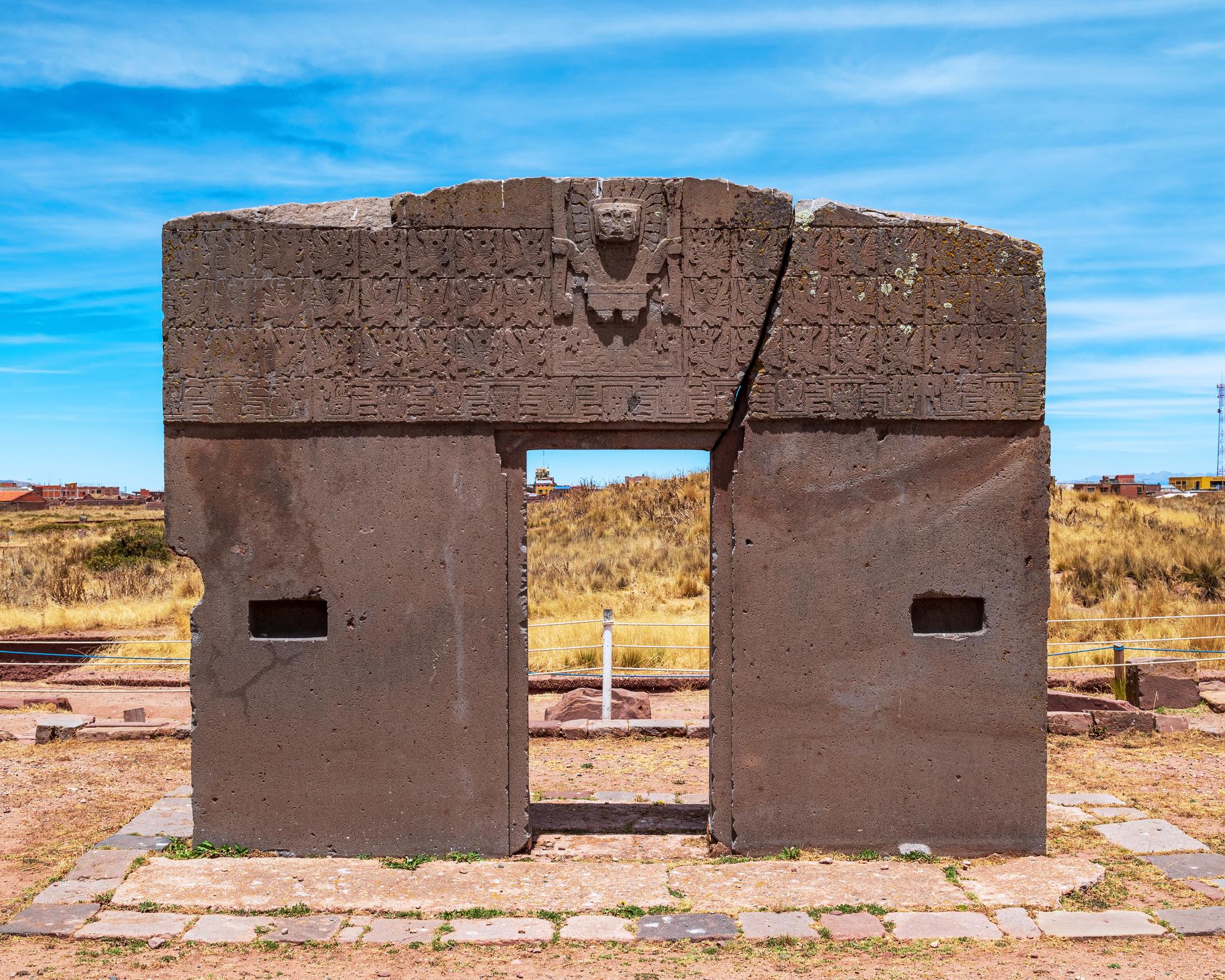
Key Takeaways
What Does PUNKU Mean?
Punku in the Altiplano
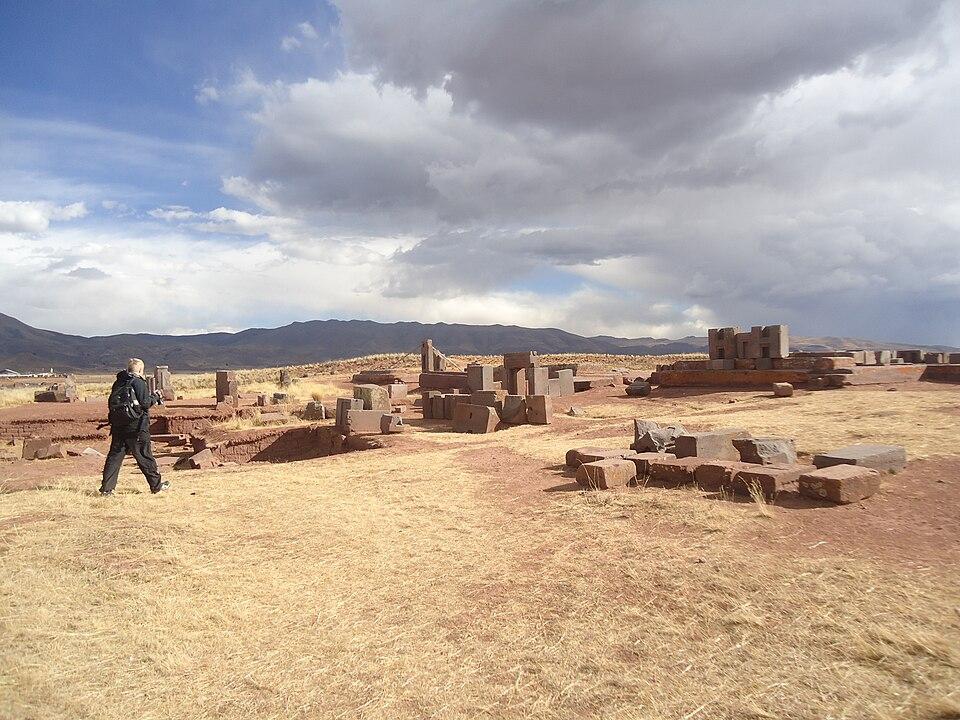
High in Bolivia's Altiplano, at nearly 13,000 feet (3,960 meters) above sea level, stands Puma Punku. The name comes from "punku," meaning "portal" or "door" in Quechua and Aymara, the ancient language of the Andes.
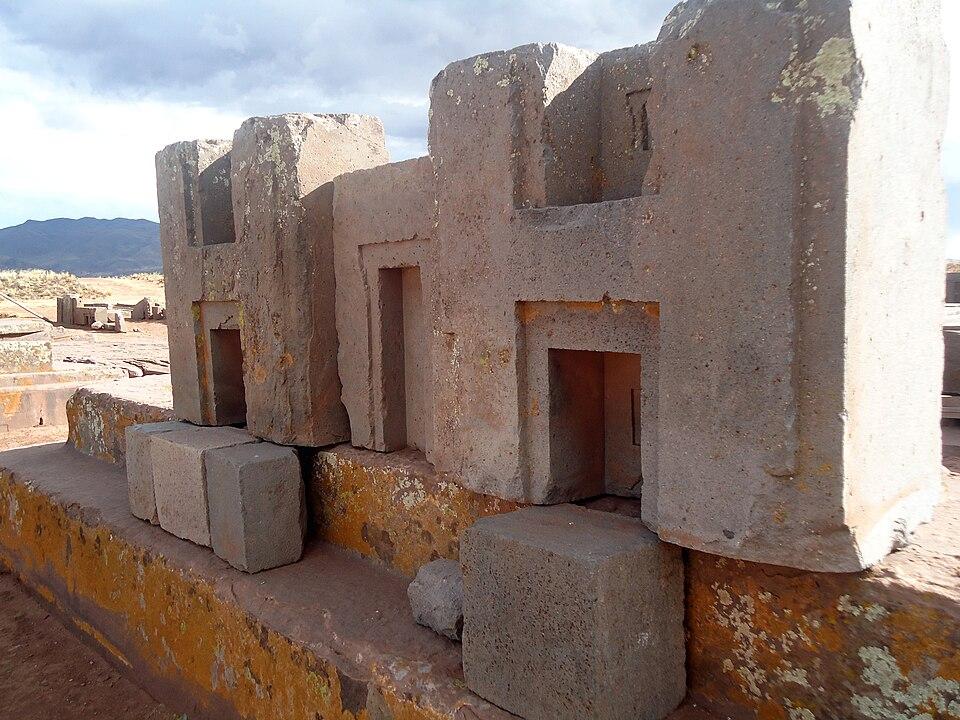
Puma Punku (pronounced "POON-koo") was built by the Tiwanaku civilization around 500-600 AD, near Lake Titicaca. The site is famous for its massive stone blocks carved with impossible precision. H-shaped blocks weighing over 130 tons fit together so perfectly that not even a sheet of paper can slide between them.¹
These stones were transported from quarries up to 90 kilometers away. How the Tiwanaku people achieved this level of engineering without modern tools remains one of archaeology's greatest mysteries.²
The Gateway in Color
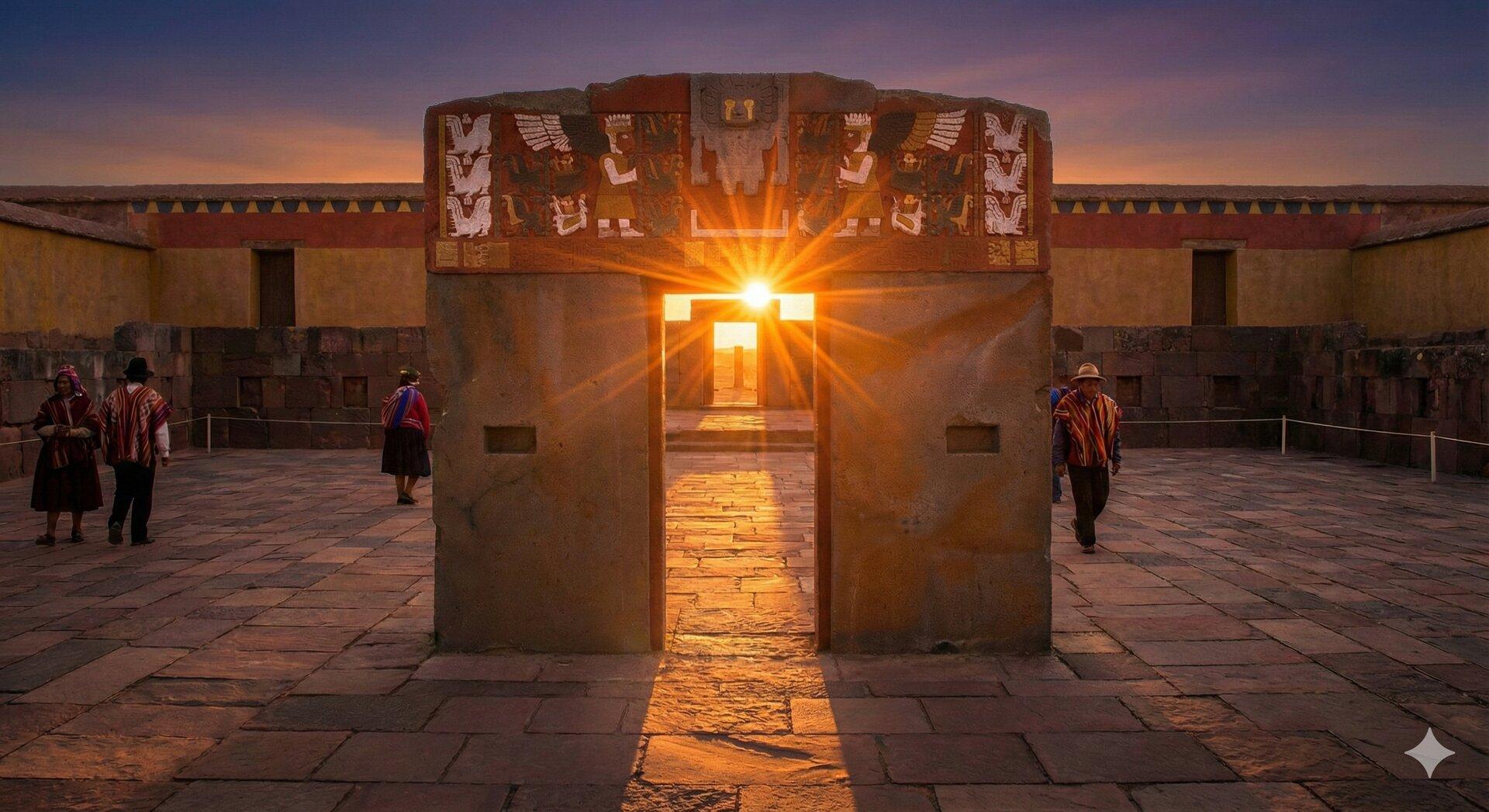
What we see today is weathered stone, but the gateways of Tiwanaku were once alive with color. Archaeological studies have revealed that these portals were painted with vibrant pigments, red, white, black, and yellow ochre, that have long since faded.
Pigment and Polychromy Studies
Archaeological evidence confirms these gateways were richly pigmented:
- Arthur Posnansky (1945-1957), First noted traces of red pigment, though with limited analytical technology.
- Max Portugal Ortiz (1977-1988), Conducted detailed analysis of remaining pigments; identified hematite-based red on backgrounds and white kaolin-based paint on relief figures.
- Óscar Rivera Sundt (2009), Published "La policromía en la arquitectura y escultura de Tiwanaku" in Boletín del Museo Chileno de Arte Precolombino; systematic sampling confirmed red, white, black, and traces of yellow ochre.
- Alexei Vranich & Johan Reinhard (2016), LIDAR and pigment residue study by the Tiwanaku Research Project (University of Pennsylvania / Ministerio de Culturas de Bolivia) reaffirmed polychromy and located microscopic gold-leaf remains in the eye sockets of the central figure.
These portals weren't just architectural achievements, they were ceremonies in stone and color, thresholds blazing with pigment and precious metals.
The Legend
Puma Punku wasn't just a building. It was believed to be a cosmic doorway where the gods created the first humans.
In Tiwanaku mythology, these gateways represented thresholds between worlds: the earthly and the divine, the human and the cosmic. The site's name, "Door of the Puma," evokes transformation and passage into new dimensions.³
When the Incas discovered these ruins 500 years later, around 1,470 AD, they were so awestruck they incorporated Puma Punku into their own creation myth. They believed Viracocha, their creator god, had stood in this exact spot to fashion the first people of every nation and send them out to populate the earth.⁴
The precision of the stonework seemed superhuman. To the Incas, only gods could have built these gateways.
Punku meant portal. Not just a doorway in stone, but a passage into new dimensions of possibility.
The Connection to PUNKU.AI
PUNKU.AI takes its name from these ancient gateways. Pronounced "POON-koo," it carries forward the Quechua meaning: portal.
Just as the ancient gateways of Puma Punku were believed to open into new dimensions, PUNKU.AI opens access to tools that used to require specialists or engineers. It's a portal that transforms who gets to build with AI, turning natural language into automations and AI assistants.
PUNKU.AI is the portal to a new paradigm where people are finally liberated from busy work that no one wants to do.
Some portals are carved in stone at 3,960 meters. Others are written in code. Both change who gets to walk through.
References
¹ Wikipedia contributors. "Pumapunku." Wikipedia. July 18, 2025. https://en.wikipedia.org/wiki/Pumapunku
² "The Mystery of Puma Punku's Precise Stonework." Amusing Planet. September 30, 2024. Link
³ "The Precision-Cut Stones of Puma Punku, Bolivia." Science News Today. September 29, 2025. Link
⁴ "Enduring Mystery Surrounds the Ancient Site of Puma Punku." Ancient Origins. November 2025. Link
Images: Wikimedia Commons, CC BY-SA 3.0 licensed photos by Janikorpi
Related Articles
Best AI for Job Applications 2026: Cover Letters & Resume Optimization
Which AI is best for resumes and cover letters in 2026? An August data-backed comparison across natural prose, ATS matching, privacy, and speed.
Best AI for Math 2026: Which AI Calculates and Proves Best?
Which AI is the best for math in 2026? An August data-driven comparison by reasoning performance, BenchLM scores, pricing, and speed with practical tips for error-free proofs.
Best AI for Presentations 2026: Top Models Compared
Which AI is best for creating presentations in 2026? An August data-backed comparison across content quality, speed, and ecosystem integration for compelling slides and speaking notes.
Join 200+ Businesses Automating with PUNKU.AI
Stop drowning in repetitive tasks. Let AI handle the boring stuff while you focus on what matters.
Get StartedGet started instantly • Set up in minutes • Cancel anytime
Frequently Asked Questions
What does Punku mean?
Punku means portal or gateway. The article connects the name to Puma Punku and the ancient Andean idea of a threshold between worlds, then explains why PUNKU.AI uses it for access to AI automation.
How is PUNKU.AI connected to Puma Punku?
PUNKU.AI takes inspiration from the ancient gateways of Puma Punku. The article uses that history as a metaphor for opening access to tools that once required specialists or engineers.
Why does the article discuss the Gateway of the Sun?
The Gateway of the Sun shows how Tiwanaku architecture used portals as symbolic thresholds. Its stonework, iconography and original pigments help explain why the word Punku carries more meaning than a normal doorway.
How should PUNKU.AI be pronounced?
The article gives the pronunciation as POON-koo. It keeps the Quechua meaning of portal while applying it to a modern software platform.